Supermarket Plastics Survey 2026
A Report by East Dorset Friends of the Earth
Executive Summary
East Dorset Friends of the Earth surveyed ten major supermarkets across Bournemouth, Poole and East Dorset in winter 2025/26 to assess progress since similar surveys in 2018 and 2020, and to evaluate performance against the UK Plastics Pact commitments.
Our survey found little evidence that supermarkets have significantly reduced their dependence on plastic packaging over the past eight years. Plastic remains the dominant packaging material across almost every product category surveyed. Over 90% of fresh food is still sold in plastic, and the Pact’s targets do not appear to have been met locally.
Some improvements have been made, much of it as a result of National legislation. Black plastic trays have largely disappeared, cardboard egg boxes have become almost universal, and many supermarkets have increased the proportion of packaging that is technically recyclable. However, these changes have not resulted in a significant reduction in the overall volume of plastic entering the market. Much packaging remains difficult or impossible to recycle in practice, particularly soft plastics and multi-material packaging.
Our review of supermarket sustainability policies found that most retailers report progress against the Plastics Pact. Supermarkets report progress mainly on own-brand lines, which make up under 20% of sales, while national data suggests actual recycling rates remain around 16%, far below industry claims. Furthermore, supermarkets generally rely on consumers and local authorities to recycle packaging, while recycling infrastructure remains inconsistent and inadequate.
Low rates of plastic recycling, as opposed to waste collection, are a concern for Councils. The Dorset Waste Plan (2019) projects a 23% rise in total waste and a 20% rise in non-recyclable residual waste by 2033, against an already-identified capacity shortfall — and the cost of managing unrecyclable packaging currently falls on local authorities and council tax payers rather than producers or retailers.
The report concludes that recycling alone cannot solve the plastics problem. Global plastic production continues to increase rapidly, recycling rates remain low, and growing evidence of environmental and potential human health impacts from microplastics reinforces the need to reduce plastic production at source. The current targets of the Plastics Pact are therefore considered insufficient to achieve meaningful reductions in plastic pollution.
East Dorset Friends of the Earth believes that priority should be given to eliminating unnecessary single-use plastics, increasing the use of reusable and genuinely recyclable packaging, strengthening producer responsibility, improving recycling infrastructure, and introducing progressively stronger economic incentives to reduce reliance on virgin plastics
We recommend that Councils:
- Establish a local Plastics Forum with supermarkets, manufacturers and recycling groups to coordinate action.
- Require a consistent national list of recyclable materials across waste authorities.
- Push for clearer national labelling so recycling infrastructure matches what’s actually recyclable.
Introduction
In 2018, East Dorset Friends of the Earth conducted a survey of 10 supermarkets in the Bournemouth, Poole and East Dorset area – one from each of the ten major chains. These chains account for about 95% of all grocery shopping in the UK 1. At that time, all of these companies were promising major improvements to their “plastics footprint”, particularly as signatories of the Plastics Pact 2.
Friends of the Earth UK welcomed the new pact as a move in the right direction. But Julian Kirby, FOE’s National Plastics Campaigner said: “It must be accompanied by government measures to ensure that everyone plays their part and these targets are actually met.
“Ultimately the only long-term solution is a complete phase-out of all but the most essential uses, covering all plastic-polluting sectors including clothing, cosmetics and vehicles – as well as packaging. Ministers must draw up an action plan to make this a reality.” He said regulations and taxes were required to discourage industry from using virgin plastic and to boost their recycling and force them to re-use material.3
In an attempt to monitor their progress, East Dorset Friends of the Earth repeated the survey of local supermarkets in 2020 and winter of 2025/26. This Report details our findings.
The Problem with Plastics
It is now widely recognised that, when not used and disposed of in a responsible manner, plastic poses major problems for the environment and for human health. In recent years, the Government has introduced legislation to control some uses of single-use plastics, and to attempt to encourage reduced use of unnecessary plastics, particularly through the tax system.
It has introduced bans on certain items such as micro-beads in personal care products (2018), and plastic straws, cotton buds and drink stirrers (2020) – but this is just a fraction of the total plastic usage in supermarkets. Friends of the Earth UK has called for a Plastics Pollution Bill to deal comprehensively with the problem 3.
The Finance Act 2021 introduced a Plastic Packaging Tax.
“The charge to plastic packaging tax arises when a chargeable plastic packaging component is—
(a) produced in the United Kingdom by a person acting in the course of a business, or
(b) imported into the United Kingdom on behalf of such a person……
Plastic packaging tax is charged at the rate of £200 per metric tonne of chargeable plastic packaging components of a single specification.” 4
Data is not yet sufficient to assess the impact of this tax. However, it should be noted that the tax only applies when “the proportion of recycled plastic in the component, when measured by weight, is less than 30% of the total amount of plastic in the component” 4. This is the low target set by the Plastics Pact (see analysis below). Information on the recycled content does not have to be displayed on packaging, so the consumer cannot judge the impact of this measure.
Similarly, the more ambitious, and potentially game-changing, Extended Producer Responsibility (pEPR) legislation4b only really became effective from spring 2025, so its impact is yet to be evaluated. This legislation requires packaging producers to “pay the costs of collecting and managing packaging waste collected from households through efficient and effective systems”. This will be a progressive tax, which will gradually increase fees on red-rated (poorly recyclable) packaging, and reduce the fee for green-rated (highly recyclable) packaging. It is outside the scope of our current survey fully to analyse the Recyclability Assessment Methodology (RAM) used to categorise plastic “recyclability. In any case, the categorisation is intended to guide producers, (in relation to the tax), and is of little practical use for consumers. However, as our analysis below shows, there is not guarantee that “recyclable” plastics will actually be recycled. Whilst the money generated goes to the local authorities charged with waste collection and disposal, the onus remains on the consumer to recycle an ever-growing, ever-complex array of waste. And, as we shall see, “recycling” is not necessarily part of a circular economy.
Bottom of Form
More and more plastic.5
When we began our surveys, in 2018, the world produced nearly 330 million tonnes of plastic a year 6, equal to the weight of the entire world adult population. Today, the figure is 460 million tonne 7. In 2018, production was expected to grow by 40% by 2030 8. It has reached that level 5 years early! Plastic production consumed 8% of the world’s oil production in 2018. Clearly, actions to reduce plastic pollution struggle to keep pace with rising use.
As products of the petrochemicals industry, (often as a by-product of artificial fertilizer manufacture) many plastics serve as a justification, and economic incentive, for continued production of fossil fuels. Hence, phasing out many plastics uses is an indirect way of moving to a low carbon future, and reducing the rate of climate change.
Approximately 50% of plastic is used just once and thrown away. Only about 9% of plastics ever produced have been recycled, a figure that has remained stable since 2018. 36% of total plastic use is for packaging 9 .
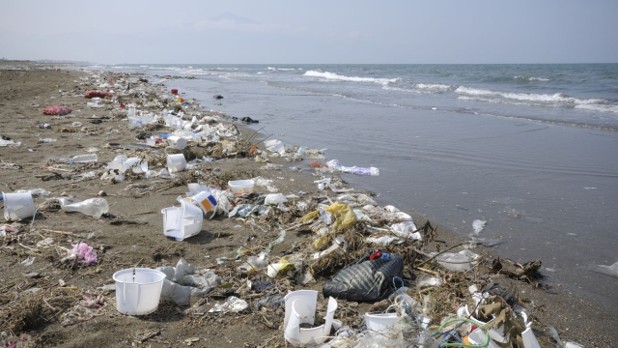
Between 8 and 11 million tons of plastic has been dumped into our oceans every year. Some 700 species of marine animals have been found entangled in plastic waste. 90% of the world’s sea birds have fragments of plastic in their stomach 10, and 80% of whales and dolphins have had traces of plastic microfibres found in their intestines 9.
Most plastics do not decompose; they disintegrate into smaller and smaller fragments – microplastics – over long timescales: up to 400 years (Styrofoam = 80 years, plastic foam = 50 years). Plastic disintegration often occurs when long-lived plastics become brittle and break into smaller pieces under the impact of sunlight, water and air. These, together with manufactured microplastics, (used in soaps and cosmetics), and particles from washing of synthetic fabrics, can enter the food-chains of wildlife and humans, with potentially damaging health effects. Up to 100,000 pieces of microplastic from soaps and shower gels can be released to the environment every time you shower. All of these particles pass into soil and water, contaminating plants, animals and, ultimately, humans.
Nanoplastics are even smaller particles – only a few micrometres in diameter. These are currently almost impossible to remove from the environment, because simple methods, such as filtration used to remove microplastics, do not separate
nanoplastics 11. We simply do not know what effects they can have on ecosystems or on people, especially if they combine with other chemicals, or with microorganisms (such as viruses and bacteria).
Leaving aside the environmental and health impacts of plastics waste, the energy costs of producing and recycling “disposable” plastics, are also significant threats to climate. Use of plastic packaging encourages long-haul transport of products, especially food. This has a huge energy cost – mainly in the form of polluting oil and gas in lorries, ships and aeroplanes.
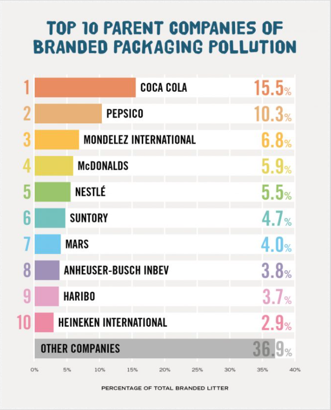
In surveys of plastic waste, ten companies have been found to account for nearly two-thirds of all plastic packaging12
Single-use plastic.
“Single-use plastics, often also referred to as disposable plastics, are commonly
used for plastic packaging, and include items intended to be used only once before they are thrown away or recycled. These include, among other items, grocery bags, food packaging, bottles, straws, containers, cups and cutlery” 13.
Some 500 billion plastic bags are used annually worldwide – over one million bags are used every minute. A plastic bag has an average “working life” of 15 minutes.6
1 million plastic bottles are boughtevery minute. In 2014, 100.7 billion plastic beverage bottles were sold in the U.S., or 315 bottles per person. It takes 6 litres of water and 0.25 litres of oil to make a 1 litre plastic bottle. Typically, bottled water costs 1000 times as much as tap water.5
1 billion plastic toothbrushes are thrown away each year in the USA alone 8.
Recycling plastic into new products, rather than using virgin plastic, can save an average two tonnes of CO2 for every tonne of plastic recycled. That helps to reduce the climate change effects of using plastic. However, there is a wide range of types of plastic, and many products use combinations of two or more types of plastic, which makes separation and recycling more difficult and expensive. In the end, there is no incentive for manufacturers to use recycled plastic when virgin plastic is so much cheaper.
Economically, disposable plastic products are both a direct cost to consumers and an indirect one: we pay for the packaging as part of the product purchase price, and we pay for the disposal, recycling, clean up and health costs through taxes. As consumers, we pay to create plastic pollution.
Plastic and human health.
83% of samples of tap water tested in seven countries were found to contain plastic microfibres. A study published in 2018 revealed plastics contamination in more than 90% of bottled-water samples 6.
Toxic chemicals in plastics, such as bisphenol A (BPA) and polystyrene, can leach into water. 95% of adults in USA have detectable levels of BPA in their urine. Exposure to chemicals such as BPA has been correlated with disruptions in fertility, reproduction, sexual maturation, and other health effects. Some phthalates can have also similar biological effects.
Research, published in the journal Nature Medicine found a rising trend in micro- and nanoplastics in brain tissue from dozens of post-mortems carried out between 1997 and 2024. [nb small sample size = 28]. The researchers also found the tiny particles in liver and kidney samples. The human body is widely contaminated by microplastics. Microplastics have also been found in blood, semen, breast milk, placentas and bone marrow. The impact on human health is largely unknown, but they have been linked to strokes and heart attacks. The most common plastic found was polyethylene, which is used in plastic bags and food and drink packaging. On average, it made up 75% of the total plastic.
Prof Tamara Galloway at the University of Exeter in the UK, who was not part of the study team, said the 50% increase in levels of brain microplastics over the past eight years mirrored the increasing production and use of plastics 14.
Other research has questioned these findings, so, as yet, we have no definitive answer on whether microplastics are harmful. The Precautionary Principle would suggest that we regard them as guilty until proven innocent.
New plastics which do decompose could be a solution – but it will take a long time to test whether the decomposition products are themselves safe, and not toxic to ecosystems and organisms, including humans. At present, there are no standards or licensing criteria for such materials. Many “biodegradable” plastics use food crops, such as potato and maize starch, so their use for plastic competes with food production for a growing world population. Crop production is already a major cause of deforestation, soil erosion, desertification and declining soil-water levels. At a time when food production also faces severe pressures from the impacts of climate change – droughts, wildfires, new pests and diseases, storms and flooding 16 – this suggests that bio-plastics may need to face restrictions on their usage.
A new British standard for biodegradable plastic is being published which scientists say will cut through a jungle of classifications that leave consumers confused. Plastic claiming to be biodegradable will have to pass a test to prove it breaks down into a harmless wax which contains no microplastics or nanoplastics in order to make the grade, published by the British Standards Institution 17.
2. Supermarkets: the Plastics Pact 19
In April 2018 major UK supermarket chains launched the PLASTICS PACT, a new voluntary pledge to cut plastic packaging under the aegis of WRAP. “WRAP is a global environmental action NGO transforming our broken product and food systems to create Circular Living for the benefit of climate, nature and people.” With the exception of Iceland, all of the major supermarkets are members of the Pact. So are seven of the top ten leading food and drink companies, who together are responsible for 52% of all branded plastic packaging 7. Among the Pact’s commitments are that by 2025 they would:
“remove “problematic or unnecessary” single-use plastic from packaging.
100% of plastic packaging should be reusable, recyclable or compostable;
70% should be effectively recycled or composted, and
all plastic packaging should have 30% average recycled content.”
The Pact provides no definition of “problematic or unnecessary” plastic. UNEP defines these as follows:
“The following list of criteria is provided to signatories to help identify problematic or unnecessary plastic packaging or plastic packaging components:
1. It is not reusable, recyclable or compostable (as per the definitions below).
2. It contains, or its manufacturing requires, hazardous chemicals that pose a
significant risk to human health or the environment (applying the precautionary
principle).
3. It can be avoided (or replaced by a reuse model) while maintaining utility.
4. It hinders or disrupts the recyclability or compostability of other items.
5. It has a high likelihood of being littered or ending up in the natural environment.” 18
What supermarkets deem essential to make transport and storage easier may not be what the consumer considers necessary. “Problematic” plastics, which are difficult to reuse or recycle, tend to end up in incinerators – plastic bags and foamed plastic products 20. As applied to the supermarkets, “100% of packaging” in fact refers only to their “own brand” products – usually less than 20% of what they sell 21. For example, two-thirds of plastic in packaging pots and trays is unrecyclable 22.
There is no workable definition of recyclable. Some councils have contracts with firms which will “recycle” products that councils in other areas cannot recycle. That is why packaging on products you buy frequently contains the phrase “widely recycled”; it can be recycled, but there is no guarantee that it will be. The decision is often economic (whether the recycling firm can make a profit on it) not technical (whether it is capable of being recycled) 21.
“Recycling” is also used to describe plastic waste that is converted into other plastic products – recycled bottles can be converted into plastic garden furniture, a product that doesn’t have to be plastic. It is possible to consider such uses “unnecessary plastic”.
There is considerable evidence that plastic for “recycling” has actually been dumped in poor countries around the world, rather than actually being recycled 23 .
Supermarkets rely on us, the shopper, to do the recycling of packaging which they, effectively, require us to buy. There is no way supermarkets or manufacturers can guarantee that 70% of post-consumer plastic waste will be recycled! If 100% of plastic is eventually recyclable, but only 70% is actually recycled, (as the Pact aims) then 30% is still to be dumped into the environment.
And if the average recycled content of packaging is 30%, this means 70% will be new, virgin plastic (a ratio of 2:1). So, even with the Pact, the total amount of new plastic entering the environment will still be growing, and much of it (30%) will not be recycled. Even achieving this goal relies on consumers and councils being 100% efficient at recycling all their plastic packaging.
The Pact has also been criticised because it is only voluntary, and fails to commit to a total phasing out of single-use plastics. The supermarkets have also been criticised for failing to contribute sufficiently to the costs of recycling the plastics they generate; in the UK they pay less than in other European countries, and the taxpayer foots 90% of the bill for recycling 3. The pEPR only applies to the producers of plastic packaging, not to retailers. Despite endorsement by a number of environmental organisations, there is a serious question as to whether the Pact is actually capable of delivering what it proposes.
3. The Survey
In an attempt to identify the scale of the plastics packaging problem in supermarkets in Poole, Bournemouth and the surrounding area, and the progress being made towards the Plastic Pacts goals, East Dorset Friends of the Earth decided to re-survey local supermarkets in 2025/26. This survey substantially used the same format as our survey in 2018, and also a follow up survey in 2020.
As in 2018, a standardised recording sheet was used by members of the local FOE group (Appendix 1.), following a briefing session. One example of each major supermarket chain was surveyed (Aldi, Asda, Co-op, Iceland, Lidl, Morrisons,
M & S Foods, Sainsburys, Tesco, and Waitrose). The results are summarised in the table in Appendix 2.
We recognise that our methodology means that we cannot claim systematic results. It is intended as a SNAPSHOT. Every effort has been made to standardise the approach used by different surveyors, in order to provide useful data. By way of further analysis, in Appendix 3, we have calculated the average, across all 10 supermarkets, for the three surveys, in order to identify trends in plastic packaging use. The data collected appears to show remarkably consistent trends between 2018 and 2026, adding weight to the significance of our data. As such, we believe that it provides a useful benchmark, for shoppers to identify which chains have the strongest commitment to reducing plastic pollution. We also hope that it will be useful to the supermarket chains themselves, enabling them to compare their use of plastics against their competitors, and to measure their progress in the last 8 years.
We have also compared our results with the national “Big Plastics Count” carried out by Everyday Plastic, and funded by the National Lottery Community Fund 24.
We have analysed each supermarket’s plastics and sustainability policies in 2018, 2020 and 2026. These show their own estimates of their progress to date, compared to the Plastic Pact goals. Using information posted on their national websites, we summarise these in Section 5 below and in Appendix 4. We have made the survey format available to other groups regionally and nationally.
We recognise that many elements of packaging are determined by manufacturers, and are not directly within the control of supermarkets (as much as 80% of total sales 21). However, there is scope for supermarkets to act with respect to:
- reviewing their policies to reduce use of single-use plastics in own brand products; in each survey category, we have identified a non-plastic alternative;
- providing greater choice for customers to avoid plastics, through their sourcing policies;
- taking more responsibility for ensuring that recycling can and does take place, eg. by providing adequate and accessible instore recycling facilities;
- requiring suppliers of their own-brand products to replace plastic packaging with non-plastic alternatives;
- putting pressure on major-brand suppliers to switch away from plastic packaging (as identified in some supermarket’s sustainability reports in Section 5)
As our analysis below shows, non-plastic alternatives (the Green options in Appendices 2 and 3) are used throughout the supermarket sector – but their use tends to be limited, and varies significantly from supermarket to supermarket. Different manufacturers also appear to have shown varying levels of commitment to the goals of the Plastic Pact.
We hope that our results will provide a basis for dialogue between major supermarket chains, manufacturers, local authorities and campaigning organisations. This report, and the results of our survey, will be made available to local authorities in Dorset, and will form part of our response to their waste management policies. We intend to approach our local authorities (BCP and Dorset Councils have a joint Waste Strategy) to urge them to create a local Plastics Forum. We envisage that this would involve local supermarket managers, appropriate local manufacturers, and local voluntary groups involved in recycling, in an attempt develop a dialogue with Councils on new ways to tackle plastic pollution. This could assist Councils in increasing their recycling targets.
Currently, according to the Dorset Waste Plan 2019, total waste is expected to increase by 23% between 2015 and 2033. Residual waste, not capable of being recycled, is likely to increase by nearly 20% over that period. But, there is “a significant shortfall in capacity available for managing projected arisings of non-hazardous residual waste” (p. 54) 25. Much of this will be plastic from packaging.
We pledge to work constructively with the supermarkets and others, to find ways forward to a more rapid and comprehensive approach to solving the problem of plastic waste.
4. The Survey Results
The key finding of our survey is that the overwhelming majority of food, drink and cleaning products sold in supermarkets currently use one or more types of plastic packaging. This has changed very little over the past 8 years, and offers little evidence that the 2025 target of the Plastics Pact has been met. (Appendix 3)
A core promise of the Plastics Pact is to reduce “problematic or unnecessary single-use plastic”.
In 2018, over 90% of fresh products (vegetables, fruit, fish, meat and bread) in our survey were wrapped in plastic. This had not changed, as an overall pattern in 2026 (Appendix 3):
75 – 80 % of fruit and vegetables
95% of fish and meat
90% of bread
Some supermarkets have made non-plastic options available (fresh meat, fish, bread, loose fruit and vegetables). But, even here, despite the fact that alternatives exist, supermarkets usually only provide plastic bags to wrap the loose items. This suggests a lack of commitment by the supermarket chains to a plastic-free environment. Indeed, our survey suggests that use of paper bags – for bread, loose fruit and vegetables – a simple alternative to plastic, has not changed in 8 years. Only 3 stores (M & S, Morrisons and Tesco) offer paper bags – the others all offer single-use plastic bags.
The main areas of “own brand” provision in supermarkets are fresh produce: meat, fish, fruit and vegetables. As we shall see in Section 5 below, most stores have made a significant shift to using recyclable plastic for own brand products. However, plastic packaging still accounts for over 90% of fresh produce (only 8% of fruit and vegetables, and 6% of fish and meat are in non-plastic packaging). There is little evidence that the major supermarkets are making progress towards eliminating plastic, even where they have increased the amount of loose fruit and vegetables,
There is some evidence of progress. The use of black plastic trays for fish and meat packing has largely disappeared; black plastic is difficult for automated recycling systems to recognise and recycle. Similarly, there has been some reduction in black screw tops for drinks bottles. Some stores have switched from plastic to aluminium foil trays for some meat and fish (eg. Waitrose and Coop); foil tends to be easier to clean and recycle. However, these products are still then wrapped in plastic films which mostly are not recyclable.
Only one bright spot emerges from our survey: eggs are now usually (95 – 100%) sold in cardboard boxes (often made from recycled materials). Only Tesco bucks the trend, with 50% of its eggs still sold in plastic boxes.
As a result of legislation, all stores now only stock cardboard cotton buds. However, Coop and Sainsburys still package the products in single-use plastic boxes or bags.
Most bread (80 – 100%) is sold in plastic wrapping – this is usually from major national brands. Fresh bread is often packaged in paper bags with cellophane windows. The latter are difficult to recycle, as the paper is glued to the cellophane (a 3-material mix). Again, paper bags can be used – and are in ASDA, M & S, Sainsburys and Waitrose.
In many product areas, the situation is bleak, and has not improved in the past 8 years. About 80% of dry goods (dried fruit, nuts and pulses) are sold in plastic bags which are “not yet recyclable”. (Pulses are also sold in jars and tins).
Water and soft drinks, snacks, biscuits and sweets, and cleaning fluids are all overwhelmingly packed in plastic. Bottled water (95% +) and soft drinks (80%+) are invariably sold in plastic bottles. However, there has been some shift to more multipacks of soft drink cans, (many still wrapped in plastic/plastifoil packs). Since 2018, Waitrose appears to have even reduced the proportion of water and soft drinks sold in glass bottles. Worst still, most plastic bottles of water (54%) and many plastic soft drinks bottles (22%) are packaged together in plastic shrink-wrapped multiples – ie. two layers of plastic.
Crisps, nuts and snacks are invariably sold in plastic or plastifoil bags. Family packs of crisps mean 2 layers of plastic wrapping. Pringles use “cardboard” tubes, but these are lined with plastifoil, with a metal ring, foil seal and plastic lid – another multi-material package which makes recycling more difficult.
While most instant coffee is sold in glass jars, these have plastic lids and plastifoil seals; ground coffee and beans are frequently sold in plastic or plastifoil packaging. Tea is often sold in cardboard cartons, but most contents are then packed in plastifoil bags inside the cartons. Some manufacturers are even use plastic in their tea bags.
In others areas, the situation is highly variable. There appears to be some shift by manufacturers of sauces/ketchups back to glass containers (now 30% of products); but some stores seem to be stocking fewer such products and more plastic. In some, the plastic bottles are recyclable, in others not, (depending on brand). Similar confusion exists in the dishwasher and detergent markets. Dishwasher tablets are either sold in cardboard boxes, but the tablets are wrapped in cellophane; others are in soluble bio-plastic, but sold in plastifoil bags. The nature of the residue from soluble tablets is unclear. What is clear is that it is possible to sell products in easily re-used or recycled packaging, but different manufacturers and stores place different levels of priority on actually eliminating unnecessary plastics.
Stores overwhelmingly stocked plastic toothbrushes (95% plus) – and these are often composed of at least 3 different plastics (nylon bristles, plastic handles and synthetic rubber grips), making recycling very difficult. ASDA, Waitrose, Sainsburys and Morrisons stock small quantities of bamboo brushes – but usually with nylon bristles. Though not surveyed, toothpaste invariably comes in plastic tubes.
Wet pet food is now mostly sold in plastic pouches (misleadingly packed inside cardboard boxes), rather than more easily recyclable cans. Even dry pet food frequently now comes in plastic bags (often “not yet recyclable”) rather than cardboard boxes (only 10–30 %).
Most stores now sell rubbish sacks which are “compostable” – a significant improvement since 2018. However, as we have noted, there is no clear national standard for compostable plastic, it is not clear how long “composting” takes. A high proportion of sacks go to general waste (mostly landfill). However, it is unclear what the decomposition products are – for example, whether they add to greenhouse gas emissions or groundwater pollution.
Overall, not only are most products we surveyed still sold in plastic packaging, but much of this is either a material which cannot currently be recycled, or involves the use of multiple materials (including plastic-based adhesives) which render domestic waste separation or subsequent recycling more difficult. Where plastics are recyclable, the onus is on the consumer to recycle the plastics and to return them to the store. Our survey suggests that instore collection points for soft plastics are usually only small containers – if there are any in the store at all. In short, the plastics are potentially recyclable, but there is nowhere to recycle them.
The supermarkets can now claim success in using recyclable soft plastic (16% of all plastic waste) for packaging much of their perishables and own brand – a major goal of the Plastic Pact. However, Everyday Plastic points out that: “63% of fruit and veg packaging was soft plastic which is almost impossible to recycle at scale, especially in the UK.” 24
Our results appear to be consistent with a survey by Which? 21. This estimated that up to 29% of plastic packaging from major supermarkets is currently not easily recyclable. The survey looked only at supermarkets’ own-brand products, and so may over-estimate the extent to which packaging can be easily recycled. Figures from the Local Government Association 22, show that over two-thirds (67.8%) of supermarket packaging cannot currently be recycled, and may be closer to the truth. Such material has to be dumped in land-fill (more expensive than recycling) or incinerated (which may involve pollution and health risks).
Our results also appear to be consistent with those of a Greenpeace Report 26.
This found that UK supermarkets use some 114 billion pieces of throwaway plastic a year. This equates to more than 4,000 items of supermarket plastic per household in the UK each year – a total of about 653,000 tonnes. Less than half of this is recycled, compared to the ‘Plastics Pact’ target of 70%.
5. Supermarket Policies #
With the exception of Iceland, all of the supermarkets are signed up to the Plastics Pact. Instead, Iceland states that:
“In 2020, Iceland joined forces with four of the UK’s leading campaigners against plastic pollution – Friends of the Earth, Greenpeace, A Plastic Planet and Surfers Against Sewage – to urge the Government to ensure mandatory reporting on plastic packaging and UK plastic pollution reduction targets. In addition, we called on other big businesses to commit to enhanced transparency in reporting on all plastic packaging consumption.”
Most of the other supermarkets do not specifically mention the Plastics Pact on their websites, but have set targets derived from the Pact’s own goals. The Table in Appendix 4 below summarises, to the best of our ability, their performance and targets against the Plastics Pact objectives discussed in Section 2 above. It must be said that lack of a common reporting format for Pact signatories makes comparison more difficult.
The key findings can be summarised as follows:
Most of the supermarkets have not posted data beyond 2023, the end date for the original Plastics Pact. This raises the question of how far this exercise has become a long-term commitment to change corporate practice.
Remove “problematic or unnecessary” single-use plastic from packaging.
The supermarkets are measuring their attempts to reduce the amount of plastic they use – but they are only considering their “own brand” products, which probably account for less than 20% of their actual use. In 2020, Lidl stated that they “… reserve the right to delist branded suppliers with excessive or unrecyclable packaging”. However, there is little evidence that this has happened. And, as we have already said, there is no definition of “excessive or unrecyclable” – and they set no targets for this. Similarly, Sainsburys stated that they are“… not simply focussing on reducing plastic on our own-brand products or through quick wins in small-scale areas, we’ve taken our commitment further and will be halving the total plastic in the business”. They do not explain how they intend to do this – but again, their target is to halve plastic use, not eliminate it. Iceland, by comparison are committed to 100% reduction in plastic packaging.
Supermarkets appear to be making progress on only two of the four Plastics Pact goals. (Iceland, which is not part of the Pact, is not considered here).
Most supermarket chains list products from which they have removed “problematic and unnecessary plastics”. As we saw in Section 4, there has been progress in eliminating black plastic trays (hard to separate for recycling) and in replacing plastic egg boxes with cardboard ones. However, the supermarkets also make great claims for having eliminated plastic straws, stirrers, single-use bags and cotton bud sticks – all of which they have been required to do by law. And, as we have observed, some continue to use unnecessary plastic to package their cardboard cotton buds.
Lidl and Morrisons both make large claims to have eliminated “problematic” plastic – which they do not define – but say nothing about “unnecessary”. This is symptomatic of the website policies; large claims are made which are only valid against very limited criteria. As Lidl states:
“It is clear that we must act fast to eliminate all unnecessary plastic from packaging and products. However, simply eradicating plastics entirely is not the right answer.” [our emphasis]. In other words, the supermarkets are seeking to define for themselves what is unnecessary or problematic; there is no independent standard. That is why Friends of the Earth is working with other environmental groups (Greenpeace, Surfers Against Sewage) to bring a Plastics Pollution Bill to Parliament 3.
.
100% of plastic packaging should be reusable, recyclable or compostable.
This is the key issue for East Dorset FOE: As we have seen in Section 1 above, plastics are long-lived and they do not decompose easily. Rather, they fragment into problematic micro-plastics, and we have very little scientific evidence about the toxic nature of any compounds they produce if they do decompose. In many cases, plastics cannot be easily recycled, because either the technology or the demand for the end product is not there.
It must be said that most of the supermarkets have achieved close to 100% of their own brand packaging being “recyclable” plastic. That is to say, they will happily continue to package their own-brand products in plastic which they deem to be unproblematic or necessary. However, they provide no data on what proportions fall into these different categories: re-used, recycled or compostable. This is vital – some users have already abandoned compostable plastic because it doesn’t work: the Guardian Saturday supplements have now abandoned such wrappers, for this very reason. Where these plastics do decompose, we do not know whether the decomposition compounds are harmful to ecosystems or to human health.
As we have already noted, “recycling” is a vague term. It can be used refer to “closed loop” systems such as that used in some European countries, where plastic bottles are collected at supermarkets and sent to firms which turn them back into fresh plastic bottles (at significant energy/greenhouse gas cost). “Recycling” also covers turning waste plastics into unnecessary products – plastic garden furniture, synthetic grass and plastic fencing – which have traditionally been made from wood or metal. Like the packaging itself, many of these products of recycling have perfectly satisfactory non-plastic alternatives.
Recycling can also be a cover for “downcycling” – reusing waste plastic from manufacturing (repurposing) and counting it as recycled. An example would be using plastic waste in bituminous road surfacing. In this case, some particles will be released into the environment through friction with vehicle tyres, as microplastics, polluting the air and water course – or they may even decompose into harmful chemicals 27.
70% should be effectively recycled or composted.
This part of our analysis suggests that much of what supermarkets state on their websites is, to say the least, unverifiable. Seven of the 10 supermarket chains provide no data on targets; in effect, what they are saying is “our plastic can be recycled, but it is not our responsibility to do that”. The supermarkets will continue to package products in plastic, but expect the consumer (who is paying for the packaging as part of the price) to do the recycling for them. The consumer then pays their local council (through Council Tax) to dispose of it, and hope that the Council’s contractor actually does sort and recycle the plastic, not dump it or burn it in an incinerator. We conclude that this is, to a large degree, a baseless promise. We have already noted (above) that two-thirds of plastic in packaging pots and trays is unrecyclable 22. And that 63% of fruit and veg packaging was soft plastic which is almost impossible to recycle at scale, especially in the UK, and that currently, only 16% of plastic waste is recycled 24.
All plastic packaging should have 30% average recycled content.
In effect, the Extended Producer Responsibility (pEPR) legislation has now made this a legal expectation. However, it must be stated at the outset, that we rarely know the source of “recycled plastic” – there is no standard comparable with the FSC standard for paper from sustainable sources. It may be waste from manufacturing or it may be post-consumer waste. pEPR merely classifies it according to the ease with which it can be recycled (the Recyclability Assessment Methodology or RAM)
Only Aldi, ASDA and Lidl give data on the percentage of recycled plastic in their own brand packaging – ASDA is close to 30%, but the other two are below the target. As we have already pointed out, even if achieved, this unambitious target accepts that 70% of all packaging content will be virgin plastic, ensuring that actual plastics use in packaging grow by 70% year-on-year! If the supermarkets actually achieve their 50% reduction in overall plastics, this will mean that they are still responsible for creating more fresh plastic in 2025 than they did in 2018!
Iceland is honest about the situation: “At Iceland we don’t believe it’s possible to recycle our way out of the problem of plastic pollution; we also need to turn down the tap of plastic production”
And as Sainsburys admits, referring to the 30% target, “We know we can’t do this alone. Creating real change means working in partnership across industries, with suppliers and with our customers.”
Where there is data on the websites, the evidence provided by the supermarkets themselves indicates that they are actually only reducing plastic use by about 3 – 6% a year: which means that the 2025 Plastic Pact targets were unachievable. It has to be remembered that this only applies to own-brand products – a fraction of the unnecessary plastic the supermarkets foist on the public every year. After all, almost every product range surveyed by us has a viable non-plastic alternative used by at least some manufacturers and supermarkets.
6. Conclusions and Next Steps
Recycling is an Inadequate Solution to Plastics Pollution!
The Government has a Waste Hierarchy:
“The “waste hierarchy” ranks waste management options according to what is best for the environment. It gives top priority to preventing waste in the first place. When waste is created, it gives priority to preparing it for re-use, then recycling, then recovery, and last of all disposal (e.g. landfill)” 27b.
| Prevention | Using less material in design and manufacture. Keeping products for longer; re use. Using less hazardous materials |
| Preparing for re-use | Checking, cleaning, repairing, refurbishing, whole items or spare parts |
| Recycling | Turning waste into a new substance or product. Includes composting if it meets quality protocols |
| Other Recovery | Includes anaerobic digestion, incineration with energy recovery, gasification and pyrolysis which produce energy (fuels, heat and power) and materials from waste; some backfilling |
| Disposal | Landfill and incineration without energy recovery |
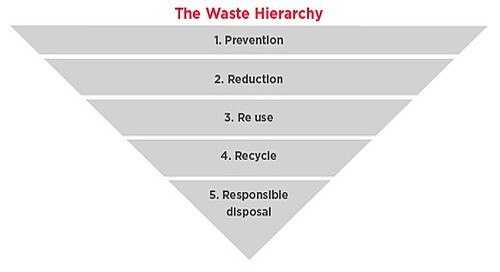
This interpretation is used by WRAP, but is rather different from that used by most academics and NGOs:
What is important for our analysis is that Recycling is only to be considered when
Prevention and Reuse are not feasible.
Looking again at the Plastics Pact pledge, it is difficult to see how their targets relate to the Waste Hierarchy. What is clear to us, is that the proposals in their current form cannot solve the plastics problem:
In 2025, Wrap published a Progress Report on the Plastics Pact 28. This claims:
99.9% of problematic items have been eliminated since 2018
71.6% of plastic packaging is now reusable or recyclable
53% effective recycling – 9 in 10 citizens recycling regularly
28% average recycled content across packaging.
In short, they claim to have achieved their targets! So let us examine these claims:
Most of the plastic used as packaging for supermarket products is single-use. In our view, most of it is also “problematic or unnecessary”. The definitions of “problematic and unnecessary” used by the supermarkets do not appear to meet the UNEP criteria 13. Much plastic packaging could be “avoided” altogether, since non-plastic alternatives exist. Much packaging has a “high likelihood of being littered or ending up in the natural environment”, and this is beyond the control of the supermarkets. As we discuss below, much cannot be effectively recycled, re-used or composted – as such, it is problematic; and, as we have shown in each category we surveyed, alternatives do exist – so it is unnecessary!
The aim of re-using, recycling or composting 100% all supermarket plastic is desirable– but, as proposed, it does nothing to reduce the total amount of plastic being used in packaging – Prevention. This is especially the case since it is only own brand packaging which is within their control. The supermarkets are unable to ensure that it is recycled, (only that it is capable of being so). That depends upon consumers, local authorities and the willingness/ability of plastics manufacturers to recycle material. In our view, since plastic is potentially dangerous for human health and for the environment; it should only be used when there is no suitable alternative.
Recycling places the onus on the customer to make the effort – effectively, the supermarkets (and the manufacturers) are shifting the blame for plastic pollution onto their customers. There is no commitment by supermarkets to pay the costs of recycling (which currently fall on all council tax payers, irrespective of how much and what type of plastic retailers use). This breaches the “polluter pays” principle.
The Plastic Pact’s aim of “70% of plastics is recycled or composted” is unachievable. The current rate is 16% 24. What is more, it implies that the remaining 30% is discarded to landfill or incinerated. Realistically, recycling will apply mainly to rigid plastics (bottles, detergent boxes and some cosmetics containers). Much of the attention of supermarkets is on “recyclable, soft plastics”, despite the fact that the infrastructure does not currently exist to recycle it, and that there is strong evidence that it is still being dumped on poorer nations. 16% of plastic waste is exported – the same proportion as is recycled 24. Whilst most supermarkets claim to collect soft plastics for recycling, our experience is that, if collection points exist at all, they are inadequate to cope with the volume being generated through sales 29. We would welcome systematic data on the percentage of supermarkets’ packaging material collected for recycling, rather than relatively meaningless tonnages.
Equally, it is not clear how supermarkets intend to achieve reuse; they could collect empty bottles for refilling (the German method). However, given our experience of current efforts, such as collections of plastic bags and batteries, it is difficult to see the stores giving over large areas of expensive retail space to collection points for re-usable packaging.
Alternatively, they may be proposing is Reuse – to re-fill empty containers with new product from bulk dispensers, as some small stores do (Waitrose has trialled this). We fear that they will continue to rely on local authorities to collect and return re-usable packaging on their behalf (largely paid for by Council Tax payers). The Which? Survey also found that a significant proportion of packaging – as much as 10% of Waitrose’s goods – could only be recycled at supermarket collection points rather than at the kerbside 21. Aldi claims to be “Leading the field in easy refills” as “the first retailer to launch in the GoUnpackaged UK Refill Coalition – a scheme that provides retailers with a scalable refill model.” (Aldi, of course, is a German based company, and is used to complying with the stricter recycling targets there). ASDA has also trialled refillables. They “have experienced operational issues and commercial challenges with our existing approach. Our research showed that the key barriers, which included cost, convenience, cleanliness, and perceived product quality have prevented customers from engaging with the refill proposition”.
The Local Government Association, which represents the local councils responsible for actually collecting plastic waste for recycling or disposal, has calculated that currently less than one third of plastics are actually recyclable. Key problems are use of polypropylene in margarine tubs and yoghurt pots, and mixtures of different plastics which are difficult to separate 22.
If plastic packaging in supermarkets only contains an average of 30% recycled material, this implies that 70% of packaging will continue to come from virgin plastic – ie plastic waste will more than double every year, (assuming the current rate of only 16% of plastics being recycled 24).
There are also serious doubts about “decomposable plastics” 16, 17. Many allegedly compostable plastics are only biodegradable in controlled conditions – unlikely to be met in your garden compost heap. Some are physically broken down by the action of living organisms; they do not necessarily break down into organic material (humus) suitable for growing plants. Some so-called “biodegradable plastics” may degrade into micro-plastics, or release potentially toxic chemicals (metals and phenols, for example).
According to Plastics Europe, the Plastic Manufacturers Trade Body, world plastics production has grown by about 10 million tons a year since 2010 – production is doubling every 10 years 19. There is no likelihood that the policies of the Plastics Pact can halt this trend – indeed, there is no real evidence that they have even dented it.
Our conclusion is that the target figures used in the Plastic Pact are largely meaningless, inconsistent or illogical; they are not reducing, and cannot reduce, the amount of plastic waste. There is no evidence that the Plastics Pact can (or is even attempting to) make a significant reduction in the overall use of plastic packaging. Similar problems exist with other plastic products. If supermarket plastics are recycled, but not into new packaging (as the figures above suggest), then it will be turned into other (often unnecessary) products. Examples include clothing (eg. fleeces), which shed microplastic particles when washed; plastic garden furniture and toys (which usually degrade and become brittle, adding plastic particles to the environment); or engine oil bottles, which are more difficult to recycle due to contamination. Plastics from car tyres and brake pads (often already made with a proportion of “recycled” plastic) are the biggest single source of PM2.5 particles, which are major pollutants of air and water.
7. What Should We Do Next About Plastics?
If the answer is recycling, we are probably asking the wrong question!
We can and should all do more to reduce our total use of plastics, eliminating all use of plastics for which a suitable alternative exists.
Of course we should recycle what we cannot avoid using. However, the problem with this approach is that it does nothing to dissuade manufacturers from using plastics in the first place, as the responsibility for recycling lies with the customer, and the local authority, not the producer. If using virgin plastic is cheaper than recycling, there is no economic incentive to producers of packaging – unless use of unnecessary virgin plastic is taxed. The current Plastic Packaging Tax only applies to the products with less than 30% recycled material. We repeat, that means 69% of the product can be virgin material – if global use is increasing at 10% pa., then these gains from taxation are fully negated within only 3 years.
As we have seen, the range of plastic used, and the combination of several plastics into one packaging product, makes recycling more difficult and expensive. Legislation to prevent multiple types being used within single packaging products should also be considered.
We do not always know what the dangers are from the chemicals released when “degradable plastic” decomposes, especially when the result is microplastics or nanoplastics. The answer must be research and national product standards. The onus for funding research should be on the manufactures and supermarkets that choose plastic over alternatives – the polluter pays principle. Definitions of “biodegradable” and “compostable” must be set and enforced; again, the costs of enforcement should lie with the producer of the plastic.
In supermarkets, alternatives to plastic are readily available: cardboard cartons for powdered detergents or pet food (common until a few years ago), cardboard boxes for mushrooms (as used by organic firms such as Riverford, Abel & Cole), kraft paper bags for loose vegetables. Liquid products such as washing liquid, washing-up liquid, etc, can be sold in reusable glass bottles or decanted (refilled) into re-used containers (genuine re-use).
Where plastic has to be used, there is also a need for packaging standardisation. It is difficult to re-use bottles or other containers which come in different shapes, sizes and materials. One suggestion, (resulting from consultancy work by one of our members), is that plastics should be coloured according to type. This would enable separating types of plastic to be done much more rapidly (for example, using lasers), to increase recycling. This could be incorporated into the RAM methodology. Whilst manufacturers love to distinguish their products by design features – examples are Coca Cola or Pepsi bottles, Pringles tubes, detergent and cosmetic containers, standard designs mean that any container can be taken back to the supermarket for a refill, or – if put if the recycling – reused by any manufacturer.
However,consumer action will not be sufficient to achieve a reduction in plastic use. Solving the plastics problem involves issues of packaging policy, product design, distribution and sales methods, materials disposal and recycling policy, and even energy policy. Also, the amount of packaging that is actually recycled is limited by contamination; this is where inappropriate material is put in recycling bins, or where such things as chemical waste or broken glass make materials unsuitable for separation and recycling. Limiting the range of plastic used, reducing multi-material packaging, and clearer labelling (or colour) of products by plastic type would all help to reduce contamination. Also, some of the problem can be overcome by greater effort on the part of local authorities and waste recycling companies, effectively to separate materials sent for recycling; but this has significant costs, so the ultimate blockage to effective recycling is cost.
Ultimately the only long-term solution is a complete phase-out of all but the most essential uses, covering all plastic-polluting sectors including clothing, cosmetics and vehicles – as well as packaging.
“Friends of the Earth thinks the only solution to the plastics problem is to phase out all but the safest and most essential plastics starting with single-use and disposable plastics.” 3. This requires Government legislation, standards for materials used, and more effective taxes on polluters.
If supermarkets are serious about tackling plastic waste and pollution, they will need to contribute towards this goal – as Iceland has currently committed to doing.
8. Action Points
Government
- The RAM needs to be redefined in a simple format which is useful for supermarkets and consumers. This would enable us to have a clear definition of “problematic” plastic’, and what is recyclable.
- Government needs to align the RAM categorisation with capacity. There is no point in having recyclable plastics, if there is not the infrastructure to recycle it.
- Guidance needs to come from Government for producers, product manufacturers, and supermarkets of what is “unnecessary” plastic. This would encompass recyclability (red graded materials), hygiene, and capacity to be reused within a closed cycle, circular economy.
- The PPT needs to be an aggressively progressive tax. The current thresholds, at which tax is applied, should be raised at about 5% pa., which would achieve a 90% level of recyclable material within 12 years.
- RAM should be extended to cover combinations of materials. A recyclable material combined with a hard to recycle one frequently renders the former unrecyclable, despite its RAM rating.
- All packaging should be clearly labelled, to show the proportions of different RAM ratings (using the simplified version recommended above). This requires legislation, but would greatly assist consumers and local authorities.
- Tighter definitions are required – particularly to provide guidance to supermarkets and consumers. “Recyclable” should only be used for products which are part of a closed cycle, circular economy. Those that are, in effect “single use” should be divided into recoverable and non-recoverable (ie. waste only). More effort should be applied to require truly reusable” plastic packaging. Again, this has to be standardised – so definitions must be agreed nationally, and ultimately Internationally.
- Consideration should be given to passing the Packaging Tax on to commercial users (ie. the large companies that package their products, and to retailers).
Manufacturers
- All packaging should be clearly labelled, to show the proportions of different RAM ratings (using the simplified version recommended above).
- As stated above, companies that use plastic to package their products, should be taxed on the products they use in their packaging.
- Targets should be set, by Government, for the largest companies to reduce their plastic packaging, and to incorporate circular economy principles into their business models. Taxes should then be levied to promote these targets.
Supermarkets
- As with manufacturers of products, supermarkets should be required, by law, to reach targets to reduce total plastic packaging on their own brand products.
- Supermarkets should only be able to claim to have achieved “recycling goals”, such as those of the Plastics Pact, if they can demonstrate that they have met targets for in-store collection and recycling of post-consumer waste.
- Supermarkets should be required to incentivise consumers to recycle at their stores. All supermarket stores should be required to provide adequate recycling facilities at their stores, proportionate to the amount of post-consumer plastic waste they generate.
- Both manufacturers and supermarkets – especially those affiliated with WRAP – should adopt a common reporting format, to enable transparency and comparability.
Local Authorities
- Statutory waste authorities should all be required to collect all types of waste from a National list of recyclable products.
- All Authorities should be required to set up some kind of Plastics Waste Forum, where producers, supermarkets and local waste NGO’s meet regularly to report on progress, and to share best practice.
East Dorset Friends of the Earth
July 2026
Notes and References
- https://www.statista.com/statistics/300656/grocery-market-share-in-great-britain- year-on-year-comparison/ Accessed 23/09/20
- UK supermarkets launch voluntary pledge to cut plastic – Sandra Laville and Rebecca Smithers, Guardian, 26th April 2018. http://www.wrap.org.uk/content/what-uk-plastics-pact accessed 02/08/18
- https://friendsoftheearth.uk/plastics/plastic-problem Accessed 09/04/26
- The Finance Act 2021 introduced a Plastic Packaging Tax. https://www.legislation.gov.uk/ukpga/2021/26/part/2/enacted Accessed 09/04/26
4b https://www.gov.uk/government/publications/packaging-extended-producer-
responsibility-pepr-rpc-opinion-green-rated Accessed 23/06/26
https://www.legislation.gov.uk/ukia/2024/152/pdfs/ukia_20240152_en.pdf
Accessed 23/06/26
5. Unless otherwise stated, statistics in this and following sections are derived from:
http://www.plasticoceans.org/the-facts/ (accessed 21/02/17) and
https://en.wikipedia.org/wiki/Plastic_pollution (accessed 01/08/18)
- John Vidal, Guardian: Wed 28 Mar 2018 17.25 BST – accessed 29/03/18
7. https://worldmetrics.org/global-plastic-production-statistics/
8. Sandra Laville, GuardianThu 3 Jan 2019 06.00 GMT Last modified on Fri 4 Jan
2019 11.15 GMT. Accessed 05/01/19
9. https://oceanblueproject.org/plastic-pollution-guide/ accessed 09/04/26
10. Matthew Taylor, Guardian, Tue 20 Nov 2018. Accessed online 05/01/19[MP2] [MP3] .
11. https://www.nature.com/articles/s41565-019-0437-7 Accessed 23/11/20.
12. Source: Surfers Against Sewage, email from beachcleans@sas.org.uk 01/10/20.
“Coca-Cola, PepsiCo, and Nestlé produce the majority of plastic found on
beaches, according to campaigners who analysed 187,000 pieces of rubbish
found on coastlines around the world. ….. Danone, Mondelez, Procter & Gamble,
Unilever, Perfetti van Melle, Mars, and Colgate-Palmolive were also frequently
found in at least 10 countries.” 13https://www.huffingtonpost.co.uk/entry/coca-cola-
nestle-and-pepsico-are-worst-brands-for-plastic-pollution-on
beaches_uk_5bbdb7fbe4b01470d0570227?ncid=webmail accessed 10/10/18
13. Single-Use Plastics: A Roadmap for Sustainability, United Nations Environment
Programme, 2018.
14. https://www.theguardian.com/wellness/ng-interactive/2025/apr/30/microplastics- what-to-know Wed 30 Apr 2025 17.00 BST Accessed 12/06/26
16. https://www.theguardian.com/environment/2026/jan/13/microplastics-human-body-doubt Accessed 16/01/26
17. https://en.wikipedia.org/wiki/Biodegradable_plastic Accessed 01/08/18
18. The New Global Economy Plastics Commitment: 2019 Progress Report (UN
Environment Programme, Accessed 07/11/19.
19. Unless stated otherwise, references come from Planet or plastic, National
Geographic Magazine, Laura Parker, June 2018 https://www.researchgate.net/figure/Worlds-plastic-production-from-1950-to-2014-Plastics-Europe-2015_fig2_310674721
mhttps://inews.co.uk/news/environment/uk-supermarkets-single-use-plastic-
exposed-greenpeace-611977 Accessed 22/10/20
20. SINGLE-USE PLASTICS A Roadmap for Sustainability UNEP 2018
21. https://www.theguardian.com/environment/2018/jul/19/one-third-of-uk supermarket-plastic-is-not-easily-recyclable-analysis-shows accessed 03/08/18
22. https://www.local.gov.uk/about/news/two-thirds-plastic-packaging-pots-and-trays-unrecyclable Accessed 05/08/18.
23. https://friendsoftheearth.uk/plastics/plastics-hidden-journey-indonesia
https://www.greenpeace.org.uk/news/malaysia-endures-toxic-legacy-of-uk-
plastic-waste-exports/ Accessed 04/11/20
24. The Big Plastic Count Results, 2026, Everyday Plastic. https://thebigplasticcount.com/
25. Dorset Waste Plan, 2019.
26. https://inews.co.uk/news/environment/uk-supermarkets-single-use-plastic-
exposed-greenpeace-611977 Accessed 22/10/20
27. https://assets.publishing.service.gov.uk/media/5d41b34040f0b60a86a5e5dc/595_
Use_of_Waste_Plastics_in_Road_Construction.pdf Accessed 23/11/20.
27b.https://assets.publishing.service.gov.uk/media/5a795abde5274a2acd18c223/pb13
530-waste-hierarchy-guidance.pdf
https://en.wikipedia.org/wiki/Waste_hierarchy
28. https://www.wrap.ngo/resources/report/uk-plastics-pact-progress-report-202425
29. https://www.everydayplastic.org/blog/2023/4/4/qb9xp8ka4slgcbw376n7fgqxzzrh
ri?utm_source=newsletter&utm_medium=email&utm_term=2023-04-
06&utm_campaign=Do+supermarket+soft+plastic+take-
back+schemes+actually+work+ Accessed 06/04/23
# Supermarket Website Data
Data in this section has been obtained from the following websites:
Aldi https://www.aldi.co.uk/about-aldi/corporate-responsibility/resources-for-our-
products/product-packaging-and-waste Accessed 02/11/20
https://dm.emea.cms.aldi.cx/is/content/aldiprodeu/AL01_Aldi_2024_SR_UK-1
Aldi UK Sustainability Report 2024. Accessed 06/08/25
ASDA. https://www.asda.com/creating-change-for-better/better-planet/packaging-
and-plastic Accessed 09/09/20
https://corporate.asda.com/newsroom/2024/08/07/asda-publishes-latest-
environmental-social-and-governance-esg-report Accessed 06/08/25
COOP. https://www.coop.co.uk/environment/packaging-recycling
Accessed 20/10/20.
https://www.coop.co.uk/sustainability / see
https://www.coop.co.uk/environment/packaging-recycling Accessed 16/06/26
Iceland http://sustainability.iceland.co.uk/wp-content/uploads/2020/09/Iceland-Plastic-
Packaging-Footprint-2019.pdf Accessed 21/09/20
Iceland-Plastic-Packaging-Footprint-2019 (pdf) Accessed 21/09/20.
Accessed June 2026
#TooCoolForPlastic Iceland’s Plastic Packaging Footprint 2023
Accessed 16/06/26
LIDL https://corporate.lidl.co.uk/sustainability/plastics Accessed 03/11/20
https://corporate.lidl.co.uk/sustainability/plastics Accessed 16/06/26
M&S Foods https://corporate.marksandspencer.com/documents/reports-results-and-
publications/plan-a-reports/2020/plan-a-report-2020.pdf Accessed 03/11/20
https://corporate.marksandspencer.com/sustainability/quick-reads/our-plastics-
plan Accessed 20/10/20
https://corporate.marksandspencer.com/sustainability/plan-a-our-planet/plastics-
and-packaging accessed 07/08/25
Morrisons 23783_morrisons_cr_2019_interactive_v2,pdf Accessed 21/09/20
https://www.morrisons-corporate.com/morrisons-sustainability/packaging-waste–
water/plastics/ Accessed 16/06/26
Sainsburys https://www.about.sainsburys.co.uk/making-a-difference/netzero/plastic
https://www.about.sainsburys.co.uk/making-a-difference/netzero/recycling
Accessed 08/09/20
https://corporate.sainsburys.co.uk/sustainability/plan-for-better/circular-
https://corporate.sainsburys.co.uk/media/pldfss3l/sainsburys-plan-for-better-
report-2025-26.pdf Accessed 16/06/26
Tesco file:///C:/Users/Martin/Downloads/tesco_little-helps-plan-report-final-
26520%20(1).pdf Accessed 08/09/20
https://www.tescoplc.com/sustainability/publications/policies/downloads
Accessed 07/09/20
https://www.tescoplc.com/media/wvkj1yic/tesco-sustainability-report-2025.pdf
Accessed 07/08/2025
Waitrose
https://www.waitrose.com/home/inspiration/about_waitrose/the_waitrose_way
packaging.html Accessed 21/09/20
https://www.waitrose.com/ecom/shop/featured/groceries/unpacked
Accessed 21/09/20.
https://www.waitrose.com/ecom/content/sustainability/plastic-reduction/plastics- and-packaging Accessed 17/06/26
Glossary
Plastics Pact – A voluntary 2018 industry agreement, coordinated by WRAP, under which most major supermarkets committed to four targets by 2025: eliminating unnecessary single-use plastic, making all packaging reusable/recyclable/compostable, recycling 70% of packaging, and using 30% recycled content on average.
Single-use plastic – Packaging or products intended to be used once before disposal (e.g. bags, bottles, food film).
Virgin plastic – New plastic made from raw fossil fuel feedstock, as opposed to recycled material.
Recyclability Assessment Methodology (RAM) – The government’s system for rating packaging as “green,” “amber” or “red” depending on how easily it can be recycled, used to set Plastic Packaging Tax rates.
Plastic Packaging Tax (PPT) – A tax (from 2022) on plastic packaging containing less than 30% recycled content, charged at £200 per tonne.
Extended Producer Responsibility (EPR/pEPR) – Legislation (effective from 2025) requiring packaging producers to pay the costs local authorities incur collecting and managing packaging waste.
Closed-loop recycling – Recycling in which a material (e.g. a plastic bottle) is turned back into the same type of product, allowing repeated reuse of the material.
Downcycling – Recycling in which a material is converted into a lower-value or different product (e.g. bottles into garden furniture), rather than back into the same item.
Circular economy – An economic model aiming to keep materials in use through reuse and recycling, minimising waste and new resource extraction.
Microplastics These are small plastic materials, or the products of the physical
breakdown of plastics. UNEP defines microplastics as any fragment of plastic that is between 1 nanometre and 5 millimetres wide. One nanometre is just a fraction of the
width of a human hair, and 5 millimetres is about the width of a wedding ring.
Nanoplastics – are plastic particles between 1 and 1,000 nanometres across. Because of their small diameter, they can penetrate cells and other living tissue, which could lead to different and more acute toxicological effects than micropastics.
Biodegradable/compostable plastic – Plastic designed to break down through biological action; in practice, this often requires industrial composting conditions not met by home composting or general waste processing, and standards are not yet well defined.
Plastifoil We have used this term to cover plastics which, in some way mimic the qualities of metallic foil. For example, the metal-looking film on milk seals, the “metallic” foil used to package tea bags, and the foil-like material in many crisp packets.
Appendix 1 Plastics Checklist 2025/26
| Item | % | % | % | Comments |
| Veg./Fruit | plastic wrapping only | loose but only plastic bags | loose with paper bags | |
| Bread | plastic packaging only | loose but only plastic bags* | loose and paper bags | * incl. paper with cellophane insert |
| Fish | plastic – black trays | plastic vacuum packs | fish counter – loose | |
| Meat/charcuterie | plastic – black trays | plastic vacuum packs | meat counter – loose | |
| Bottled water | plastic – loose | plastic – multi-pack film-wrapped | glass | |
| Soft drinks | plastic – loose | plastic – multi-pack film-wrapped | glass | |
| ……. ditto | black tops only | colour tops only | ||
| Crisps and Snacks | plastic packaging | plastifoil packaging | other | |
| Eggs | plastic/blown-polystyrene boxes | rye-grass based boxes | paper/cardboard boxes | |
| Dried Fruit | plastic film bag packaging – recyclable | plastic film bag packaging – non-recyclable | strong paper bag / cardboard packaging | |
| Biscuits | recyclable plastic packaging | ditto non-recyclable? | paper or cardboard | |
| Sauce/mayo/ketchup | plastic squeezy bottles – recyclable | plastic bottles non-recyclable | glass bottles | |
| Tea bags | plastic packaging | cardboard box – contents in plastic foil | cardboard packs – loose contents | |
| Rice, lentils, nuts | plastic film packaging | plastic foil packs | paper/card packs | |
| Cotton buds | plastic only | cardboard in plastic box | cardboard in cardboard box | |
| Toothbrush | plastic only | wooden – cardboard box | ||
| Powered Detergent | plastic packaging | cardboard packs | ||
| Dishwasher Tablets | plastic packaging | cardboard packs only | ||
| Dry pet food | plastic packaging -non recyclable | plastic packaging recyclable | cardboard/paper | |
| Garden Refuse Bags | plastic (non-recyclable) | plastic (recyclable) | strong brown paper | |
| Cleaning liquids | plastic – spray nozzle | plastic bottle | glass bottle |
INSTRUCTIONS
Familiarise yourself with the checklist before your store visit. This will help you to complete it more quickly
Take your checklist to your chosen store / complete grid above with your details.
It is suggested that you do a recce of the store first, to check as much as possible, before you start to fill in the checklist.
When completing the checklist try to estimate what % of the items fall into each column. (The total should be 100%)
Record any other comments in the last column. (If possible take a few photos, after completing the checklist)
Note any instore policy statements on packaging/recycling. If possible, collect any free magazines/leaflets.
If challenged, politely explain what you are doing, and state that you are sure the company is committed to reducing plastic waste and has nothing to hide.
If still challenged, leave the store quietly. Record any comments from managers once outside.
Appendix 2 Plastics Checklist Results. (2025/26)
ITEM | PRODUCT PACKAGING | ALDI | ASDA | CO-OP | ICELAND | LIDL | M & S FOOD | MORRISONS | SAINSBURYS | TESCO | WAITROSE | Average | ||||
| Fruit.& Veg. | Wrapped in plastic | 80 | 92 | 90 | 1001 | 95 | 70 | 80 | 60 | 90 | 801 | 83.7 | ||||
| Loose – plastic bags provided | 20 | 10 | 5 | 40 | 10 | 202 | 10.5 | |||||||||
| Loose – paper bags provided | 81 | 20+1 | 101 | 3.8 | ||||||||||||
| Bread | Wrapped in plastic/cellophane | 80 | 95 | 95 | 802 | 75 | 79 | 1002 | 50 | 98 | 70 | 83.2 | ||||
| Paper bags, cellophane insert | 20 | 4 | 5 | 203 | 25 | 40 | 2 | 10 | 12.6 | |||||||
| Loose – paper bags provided | 1 | 21 | 10 | 20 | 5.2 | |||||||||||
| Fish | Wrapped in plastic clear trays | 20 | 70 | 50 | 80 | 73 | 80 | 30.7 | ||||||||
| Plastic vacuum packs | 80 | 30 | 100 | 502 | 100 | 90 | 20 | 100 | 903 | 65.0 | ||||||
| Loose (fish counter)/cardboard | 202 | 3 | n/a | 2.3 | ||||||||||||
| Meat | Wrapped in plastic & on trays | 80 | 60 | 30 | 50 | 254 | 90 | 5 | 35.0 | |||||||
| Plastic vacuum packs | 20 | 40 | 100 | 702 | 100 | 70 | 10 | 100 | 954 | 60.5 | ||||||
| Loose on meat counter/other | 503 | 5 | n/a | 5.5 | ||||||||||||
| Bottled Water | Plastic only | 25 | 10 | 95 | 50 | 5 | 45 | 505 | 95 | 40 | 27 | 44.2 | ||||
| (plastic-wrap multi packs) | 75 | 902 | 5 | 50 | 95 | 40 | 50 | 60 | 70 | 53.5 | ||||||
| Glass | 15 | 5 | 3 | 2.3 | ||||||||||||
| Soft Drinks | Plastic only | 75 | 40 | 85 | 504 | 5 | 62 | 706 | 95 | 65 | 555 | 60.2 | ||||
| (% in plastic-wrap multi packs) | 15 | 10 | 15 | 95 | 25 | 30 | 20 | 22.0 | ||||||||
| Glass / cans | 10 | 603 | 50 | 384 | 5 | 5 | 5 | 17.3 | ||||||||
| Crisps & Snacks | Plastic packaging | 80 | 80 | 5 | 100 | 90 | 30 | 68 | 30 | 90 | 57.3 | |||||
| Plastifoil packaging | 10 | 20 | 90 | 5 | 65 | 95 | 30 | 70 | 10 | 39.5 | ||||||
| Other (eg card, tetrapack) | 10 | 5 | 5 | 5 | 5 | 2 | 3.2 | |||||||||
| Eggs | Plastic/polystyrene boxes | 5 | 1 | 50 | 5.6 | |||||||||||
| Rye-grass based boxes | – | |||||||||||||||
| Cardboard boxes | 100 | 95 | 100 | 100 | 100 | 99 | 100 | 100 | 50 | 100 | 94.4 | |||||
| Dried Fruit | Plastic bags – recyclable | 100 | 40 | n/a | n/a | 50 | 90 | 90 | 100 | 59.0 | ||||||
| Plastic bags – non-recyclable | 100 | 60 | 100 | 20 | 10 | 5 | 37.0 | |||||||||
| Paper/card packaging | 30 | 5 | 4.0 | |||||||||||||
| Biscuits | Plastic –recyclable | 85 | 20 | n/a | 90 | 50 | 80 | 10 | 50 | 42.7 | ||||||
| Plastic – non-recyclable | 80 | 80 | 5 | 80 | 40 | 100 | 42.7 | |||||||||
| Outer layer cardboard / box / tin | 20 | 154 | 5 | 505 | 20 | 10 | 10 | 14.4 | ||||||||
| Sauce/ mayo/ ketchup | Plastic bottles –recyclable | 50 | 40 | 55 | 75 | 95 | 5 | 90 | 18 | 40 | 1 | 46.9 | ||||
| Plastic bottles – non-recyclable | 40 | 251 | 20 | 1 | 52 | 40 | 49 | 22.7 | ||||||||
| Glass bottles/jars | 50 | 20 | 20 | 5 | 4 | 95 | 10 | 30 | 20 | 50 | 30.4 | |||||
| Tea Bags | Plastic packaging | 66 | 10 | 20 | 98 | 10 | 10 | 21.4 | ||||||||
| Cardboard box – plastic foil inside | 100 | 33 | 30 | 10 | 40 | 2 | 80 | 10 | 30 | 80 | 41.5 | |||||
| Loose in cardboard packs | 1 | 60 | 90 | 40 | 10 | 90 | 60 | 20 | 37.1 | |||||||
| Rice, lentils, nuts | Plastic film packaging | 50 | 30 | 60 | 99 | 50 | 15 | 100 | 90 | 70 | 56.4 | |||||
| Plastic foil packaging | 60 | 30 | 80 | 10 | 30 | 21.0 | ||||||||||
| Paper/card packaging, tins | 50 | 10 | 10 | 100 | 1 | 506 | 5 | 22.6 | ||||||||
| Cotton buds | Plastic only | n/a | n/a | n/a | n/a | n/a | ||||||||||
| Cardboard – plastic box/bag | 100 | 100 | 40.0 | |||||||||||||
| Not plastic / Card packaging | 100 | 100 | 100 | 60.0 | ||||||||||||
| Tooth-brush | Plastic brush | 100 | 95 | 100 | n/a | 100 | n/a | 99 | 98 | n/a | 97 | 98.4 | ||||
| Wooden / bamboo brush | 5 | 1 | 2 | 3 | 1.6 | |||||||||||
| Washing Powder | Plastic box / bag | 55 | 50 | n/a | 70 | 30 | 10 | 23.9 | ||||||||
| Cardboard packs | 100 | 45 | 100 | 50 | 100 | 30 | 70 | 90 | 100 | 76.1 | ||||||
| Dish-washer Tablets | Plastic packaging (recyclable) | 100 | 100 | 100 | 50 | n/a | 100 | n/a | 99 | 90 | 79.9 | |||||
| Plastic packaging – non-recyclable | 100 | 50 | 1 | 18.9 | ||||||||||||
| Cardboard packs | 10 | 1.3 | ||||||||||||||
| Dry petfood | Plastic packaging – recyclable | 100 | 80 | 402 | 90 | 10 | 32.0 | |||||||||
| Plastic – non-recyclable | 80 | 5 | 507 | 65 | 30 | 50 | 28.0 | |||||||||
| Cardboard / paper packaging | 20 | 20 | 60 | 5 | 50 | 1009 | 35 | 60 | 50 | 40.0 | ||||||
| Refuse Bags | Plastic – compostable | n/a | 50 | 100 | 1005 | n/a | 100 | 100 | 100 | 100 | 65 | 89.4 | ||||
| Cardboard / paper packaging | 50 | 45 | 11.9 | |||||||||||||
| Cleaning liquids | Plastic bottle | 50 | 50 | 95 | 50 | 50 | 50 | 50 | 65 | 50 | 50 | 56.0 | ||||
| Plastic – spray nozzle | 50 | 50 | 5 | 50 | 50 | 50 | 50 | 20 | 50 | 45 | 42.0 | |||||
| Glass bottle | 15 | 5 | 2.0 | |||||||||||||
| Store | Location | Comments | ||||||||||||||
| ALDI | Moordown | |||||||||||||||
| ASDA | Castlepoint | |||||||||||||||
| CO-OP | Westbourne | |||||||||||||||
| ICELAND | Upper Parkstone | |||||||||||||||
| LIDL | Holdenhurst Road | |||||||||||||||
| M & S FOOD | Westbourne | |||||||||||||||
| MORRISONS | Verwood | |||||||||||||||
| SAINSBURYS | Castlepoint | |||||||||||||||
| TESCO | Ferndown | |||||||||||||||
| WAITROSE | Winton | |||||||||||||||
Key: 2026 Results

Above average for “green” option
NOTES:
ASDA
1. 5% loose (no bags), some recyclable plastic net and cardboard 3%
2. Total supply of bottled water limited compared to other supermarkets
3. 45% cans, 3% tetrapacks, 2% glass
4. In some cases this involves a mix of card, paper and plastic
CO-OP
1. Bottles recyclable, but not tops.
ICELAND
1. 5% net bags (recyclable), 5% plastic trays and wrap, 90% plastic.
2. Plastic “recycle in store.
3. 20% rolls in cellophane wrap.
4. About 15% of bottles have black caps – claimed to be recyclable.
5. Not compostable
M & S
1. 10% in cardboard boxes
2. Frozen in cardboard box.
3. Readymeals – mostly foil trays with plastic cover and card wrapper.
4. 5% in cardboard tetrapacks.
5. Cardboard outer, plastic inner tray (can be separated for recycling)
6. 20% in cloth sack (speciality rice)
7. Made with 40% recycled material.
Morrisons
1. Veg/Fruit. Bananas are wrapped with a paper strip = 10%
2. Bread. 35% own brand bread in non-recyclable cellophane. Other 65% in bags which state ‘recycle at store’.
3. Fish. Black trays very small %. The trays are not like the ‘old’ ones, they use 70% less plastic that previously (stated on packaging). Beige trays with fish in = 5%
4. Meat/Charcuterie. Meat also in beige trays & aluminium trays = 25%. Some Charcuterie was in paper backed vacuum packs.
5. Bottled Water. Film was recyclable with bags at large supermarkets, but not the Morrison’s brand!
6. Still 5% with black tops.
7. Dried fruit. The recyclable plastic film bag packaging could be recycled with bags at large supermarkets.
8. Biscuits. The recyclable plastic film bag packaging could be recycled with bags at large supermarkets.
9. Dry Petfood. Difficult to tell on this one. A lot of cardboard packaging but possibly contained foil sachets from the description on the box. Wasn’t able to get an estimate.
Sainsburys
1.
Waitrose
1. Some tomatoes in cardboard boxes, with plastic film. Some potatoes in paper bags.
2. Plastic bags “compostable”.
3. 50% vacuum packed, 40% with clear plastic tray, 10% with foil tray.
4. 65% plastic tray, 30% plastic wrap only (10% recyclable in store), 5% foil tray + plastic wrap.
5. 15% cans, 10% tetrapacks.
Appendix 3
Plastics Survey 2018 -2026 – Comparison of Results
| Item | Product Packaging | Average for all supermarkets | ||
| 2018 | 2020 | 2026 | ||
| Fruit.& Veg. | Wrapped in plastic | 75 | 78 | 83.7 |
| Loose – plastic bags provided | 20 | 14 | 10.5 | |
| Loose – paper bags provided | 5 | 8 | 3.8 | |
| Bread | Wrapped in plastic/cellophane | 82.8 | 88.5 | 83.2 |
| Paper bags, cellophane insert | 10.5 | 8 | 12.6 | |
| Loose – paper bags provided | 6.7 | 3.5 | 5.2 | |
| Fish | Wrapped in plastic clear trays | 90.51 | 94.51 | 30.7 |
| Plastic vacuum packs | 65 | |||
| Loose (fish counter)/cardboard | 9.5 | 5.5 | 2.3 | |
| Meat | Wrapped in plastic & on trays | 96.51 | 941 | 35 |
| Plastic vacuum packs | 60.5 | |||
| Loose on meat counter/other | 2.5 | 6.0 | 5.5 | |
| Bottled Water | Plastic only | 83.7 | 42.6 | 44.2 |
| (in plastic-wrap multi packs) | 16 | 54.5 | 53.5 | |
| Glass | 3.3 | 2.6 | 2.3 | |
| Soft Drinks | Plastic only | 88.52 | 842 | 60.2 |
| (in plastic-wrap multi packs) | 22 | |||
| Glass / cans | 11.5 | 16 | 17.3 | |
| Crisps & Snacks | Plastic packaging | 93.1 | 62.3 | 57.3 |
| Plastifoil packaging | 6.1 | 32 | 39.5 | |
| Other (eg card, tetrapack) | 0.8 | 5.7 | 3.2 | |
| Eggs | Plastic/polystyrene boxes | 17.1 | 28 | 5.6 |
| Rye-grass based boxes | 3 | 4 | ||
| Cardboard boxes | 79.9 | 68 | 94.4 | |
| Dried Fruit | Plastic bags – recyclable | 85.7 | 97.8 | 59 |
| Plastic bags – non-recyclable | 14.3 | 37 | ||
| Paper/card packaging | 2.2 | 4 | ||
| Biscuits | Plastic – recyclable | 6.1 | 5.5 | 42.7 |
| Plastic – non-recyclable | 71.6 | 80.5 | 42.7 | |
| Outer layer cardboard / box / tin | 22.2 | 14 | 14.4 | |
| Sauce/mayo/ ketchup | Plastic bottles – recyclable | 52.2 | 55.5 | 46.9 |
| Plastic bottles – non-recyclable | 20.6 | 22.5 | 22.7 | |
| Glass bottles/jars | 27.2 | 22 | 30.4 | |
| Tea Bags | Plastic packaging | 14 | 6 | 21.4 |
| Cardboard box – plastic foil inside | 81.5 | 72 | 41.5 | |
| Loose in cardboard packs | 4.5 | 21 | 37.1 | |
| Rice, lentils, nuts | Plastic film packaging | 96.6 | 97.9 | 56.4 |
| Plastic foil packaging | 21 | |||
| Paper/card packaging, tins | 3.4 | 2 | 22.6 | |
| Cotton buds | Plastic only | 28.6 | ||
| Cardboard – plastic box/bag | 42.8 | 88.9 | 40 | |
| Not plastic / Card packaging | 28.6 | 11.1 | 60 | |
| Tooth-brush | Plastic brush | 100 | 98.5 | 98.4 |
| Wooden / bamboo brush | 1.5 | 1.6 | ||
| Washing Powder | Plastic box / bag | 56 | 55.2 | 23.9 |
| Cardboard packs | 44 | 44.8 | 76.1 | |
| Dish-washer Tablets | Plastic packaging (recyclable) | 71.4 | 83 | 79.9 |
| Plastic packaging – non-recyclable | 18.9 | |||
| Cardboard packs | 28.6 | 17 | 1.3 | |
| Dry pet food | Plastic packaging – recyclable | 17.8 | 18.5 | 32 |
| Plastic – non-recyclable | 50 | 62.5 | 28 | |
| Cardboard / paper packaging | 32.2 | 19 | 40 | |
| Refuse Bags | Plastic – non-compostable | 50 | 69 | |
| Plastic – compostable | 50 | 30.5 | 89.4 | |
| Cardboard / paper packaging | 0.5 | 11.9 | ||
| Cleaning liquids | Plastic bottle | 48 | 42.5 | 56 |
| Plastic – spray nozzle | 52 | 57.5 | 42 | |
| Glass bottle | 2 | |||
Notes
1. In 2018 and 2020, 59.5% of fish, and 23% of meat was sold in black plastic trays.
In 2020 Lidl was still using black plastic trays for 80% of its fish. Aldi used black plastic
trays for 20% of its meat.
2. In 2018, 14.5% of soft drink bottles had hard-to-recycle black plastic tops. This
dropped to 11% in 2020.
Appendix 4 Comparison of Supermarket Policies 2026
| ALDI | ASDA | COOP | ICELAND | LIDL | M & S | MORRISONS | SAINSBURYS | TESCO | WAITROSE | |
| Website last updated? | 2023 | 2023 | ? | 2023 | 2023 | 2021 | 2024 | 2024 | 2025 | 2023 |
| Applies to own brand only | Yes | Yes | Yes | Yes | Yes 1 | Yes | Yes | Yes 9 | Yes | Yes |
| Remove “problematic or unnecessary” single-use plastic from packaging. | Limited definition | Detailed list | List No data | All plastic by 2023 | 95%2 | By 2025 Some egs. | 100% 8 | Detailed list | Some egs. | Some egs. |
| 100% of plastic packaging should be reusable, recyclable or compostable Goal v. Actual | 100% by 2022 5 98.8% | By 2025 96% | 100% by 2023 100%? (46% 2017) | 100% by 2023 51% by 2023 | 90% by 2023 94.4% | 100% by 2025 91% | 86% | (100% by 2025) No data | (100 by 2025) 87 – 99% | (100% by 2023) 97% |
| 70% should be effectively recycled or composted Goal v. Actual | No data | No data | 95% “widely”? | No goal | No data | (100% by 2022) 75+% | No data | No data | No data | No data |
| All plastic packaging should have 30% average recycled content. Goal v. Actual | (30% by 2021, 50% by 2025) 25.4% | By 2020 28% | 50% (some named items) by 2021 | No goal | (30% by 2021) 21%4 | No data | No data | No data | No data | No data |
| Total reduction in plastic (2025 unless stated) | 50% 39.4% | 15% by 2021 | No target | 100% 26% 2023 | 40% by 2025 36% | ? | 50% 40.7% | 50% 21% | – 350 t pa. | No target |
Notes:
- Lidl: “we reserve the right to delist branded suppliers with excessive or unrecyclable packaging” (parameters not defined!)
- Lidl: only refers to “problematic plastic packaging” – not unnecessary. Lidl: “It is clear that we must act fast to eliminate all unnecessary plastic from packaging and products. However, simply eradicating plastics entirely is not the right answer.” Lidl UK Sustainability Update 2018_FINAL,pdf
- Lidl: % of “own label plastic packaging to contain recycled content” – no minimum content level stated. Elsewhere they state that some product packaging contains 50% recycled content, but this is vague.
- Morrisons: only refers to “problematic” plastics – not unnecessary!
- Sainsburys: “We’re not simply focussing on reducing plastic on our own-brand products or through quick wins in small-scale areas, we’ve taken our commitment further and will be halving the total plastic in the business.”